Topic: research

LESSONS FOR TEACHERS
A study led by Stacy Overstreet, professor of psychology, shows that when the COVID-19 pandemic forced New Orleans public school teachers to switch from in-person instruction to a virtual or hybrid setting, the transition left many feeling anxious over their ability to impact student learning. The study also reveals that many teachers suffered from anxiety, depression and post-traumatic stress. It recommends expansion of access to mental health care, improvement in sick leave and bereavement policies and offering hazard pay.https://tulane.it/lessons-for-teachers
LINGERING IMPACTS ON BRAIN
Tracy Fischer, associate professor of microbiology and immunology at the Tulane National Primate Research Center, led a study published in Nature Communications, investigating how COVID-19 affects the central nervous system. The research team found severe brain inflammation and injury consistent with reduced blood flow or oxygen to the brain, including neuron damage and death. Microhemorrhages, or small bleeds in the brain, were also present. Surprisingly, these findings were seen in subjects that did not experience severe respiratory disease from the virus.https://tulane.it/lingering-impacts
ZOONOTIC DISEASE
Hannah Frank, an assistant professor in ecology and evolutionary biology and bat expert, is sharing in a $1.25 million award with scientists from other universities to study how to mitigate zoonotic threats. Zoonotic disease — diseases from non-humans that can infect humans — are an increasing problem and threat to human health and well-being. Bats are a particularly important group to understand because they can spread and shed infections including SARS-CoV-2, which do not cause disease in bats but are highly lethal to humans and other animals.https://tulane.it/zoonotic-disease
MENTAL HEALTH CHALLENGES
More than two years into the COVID-19 pandemic, behavioral health concerns continue to disrupt the lives of Americans, and addressing those concerns should be a priority, according to a study by the School of Social Work. Published in the journal Scientific Reports, research from Patrick Bordnick, dean of the school, and Tonya Hansel, a disaster mental health expert who oversees the school’s doctorate program, says that despite vaccinations and lifted restrictions, mental health issues continue to be a crucial concern as the pandemic enters a recovery phase.https://tulane.it/covid-mental-health

Equity, Diversity & Inclusion
The Provost’s Award for Excellence in Equity, Diversity and Inclusion recognizes research that addresses societal inequities and promotes social change.
Research, Scholarship & Artistic Achievement
The Tulane University Research, Scholarship, and Artistic Achievement Awards were presented for the first time in November at a gala at the Higgins Hotel near The World War II Museum in New Orleans.
Hall of Fame
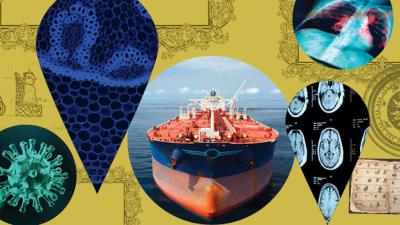
For the first time, Research, Scholarship and Artistic Achievement Awards were bestowed on Tulane’s stellar researchers and scholars. We devote several stories to them in this issue of the Tulanian.
VIRAL LOAD
A study co-led by Dr. Xiao-Ming Yin, chair of Pathology and Laboratory Medicine and the Dr. Donald R. and Donna G. Pulitzer Professor, found that cycle thresholds from PCR tests — an indicator of the amount of virus an infected person carries — aren’t a reliable gauge for identifying those most likely to transmit COVID-19. https://tulane.it/viral-load
INHALED VACCINE
Researchers at the Tulane National Primate Research Center found that an inhaled vaccine currently being developed induces a robust and long-lasting immune response against SARS-CoV-2 in nonhuman primates, similar to the protection provided by the Moderna vaccine. https://tulane.it/inhaled-vaccine